





- 823 Views
- 8 Min Read
- (0) Comment
“Dubai has always given me a sense of security, whether it’s the middle of the day or late at night. It’s one of the reasons so many people choose to build their lives here.”
— Shivali Gaikwad, Indian expat, eight years in Dubai
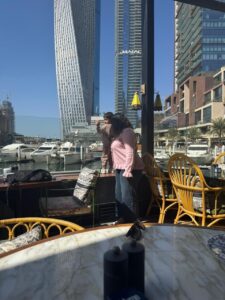
There are cities you visit, and there are cities that hold you. Dubai, for millions of people who have planted roots there, is firmly the latter. But in late February 2026, when the Gulf erupted into a conflict that sent shockwaves across the world, one very human question cut through the noise: how is Dubai safety for tourists in 2026?
Many people wanted to know, ‘What does life in Dubai right now actually feel like for the people who call it home?’
We sat down with Shivali Gaikwad, an Indian professional who has lived in Dubai for eight years, to find out. What she shared is not a government press release or a polished travel advisory. It is something far more valuable. It is the unfiltered, lived-in truth of a woman living in Dubai, watching her city navigate one of the most difficult moments in its modern history.
The Moment Everything Changed: The Gulf Crisis of March 2026
It started on an ordinary Saturday afternoon.
Reports were circulating that attacks had struck near U.S. bases in the region, and people were beginning to ask whether Dubai could be affected. Shivali, like most residents, was watching and waiting. Then, around 4:30 that evening, she stepped out for her usual run.
“I suddenly heard a loud interception in the sky—an explosion-like sound that I had never heard before in Dubai,” she recalls. “In that moment, it hit me that this wasn’t just news anymore. Something real was unfolding.”
That night, an emergency alert came through on phones. It was a difficult night filled with uncertainty. However, even as the sky unfolded with missiles, the residents and travellers in Dubai did not feel even half of it because the Dubai government was working overtime to neutralise the threats.
What the Headlines Miss About Dubai Travel Safety Update
Here is the gap that matters. International headlines painted a picture of chaos. The ground reality, according to residents, was something else entirely.
On March 10, 2026, Dubai’s Department of Economy and Tourism issued an official statement confirming that despite the Gulf crisis, the city remains calm, operational, and fully committed to serving both residents and international tourists. It was the kind of institutional response that Shivali had come to expect after nearly a decade in the UAE. It was clear, prompt, and grounded.
“What people outside the UAE might not always see is that life here continues with a sense of calm and order,” she says. “Sometimes international headlines can make the situation sound more chaotic than it actually feels on the ground.”
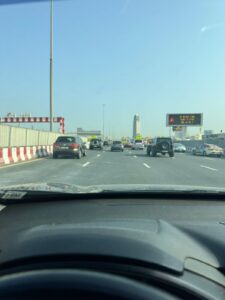
On-the-ground observers reported that virtually all restaurants, cafes, gyms, and swimming pools remained open. People were swimming at beaches. The metro and taxis were operating normally, and around 95% of major attractions remained available to tourists, with no widespread panic visible.
The Dubai Department of Economy and Tourism also confirmed that there were no movement restrictions within the city, land borders with Oman remained open with normal visa-on-arrival policies, and key events continued as scheduled.
This is the Dubai travel safety update that many travellers never received. The city did not stop. It simply adapted.
The Air Defence No One Expected: Dubai Security Measures
Perhaps the most extraordinary part of this Dubai resident experience is what most residents never directly saw, but all of them felt.
The UAE’s air defence systems intercepted hundreds of incoming drones and missiles before they could cause large-scale damage. It showed the readiness of the country. The UAE’s defence posture operates around the clock, with THAAD, Patriot, and IRIS-T missile defence systems actively operational. There is also a diplomatic neutrality that has long positioned the UAE as a balanced regional power.
Shivali puts it simply: “When you think about it, the fact that these threats are being intercepted before they even reach the city says a lot about the systems in place. As residents, we are witnessing how advanced the UAE’s security measures really are.”
For a woman living in Dubai who steps out for evening runs, sends her child to school, and commutes to work every morning from the office, this Dubai security measure is not abstract reassurance. It is the architecture of daily life that continues to hold.
A Leader Who Walked Into a Mall
Leadership in a crisis is often measured in statements. In Dubai, it showed up differently. UAE President Mohammed bin Zayed Al Nahyan walked through Dubai Mall during the height of the regional tensions in a visible attempt to reassure jittery residents and stranded tourists.
Shivali noticed similar signals. “Recently, we even saw members of the leadership visiting public places like malls, which sends a very strong message of confidence and stability,” she says. “When leadership remains calm and visible, that sense of reassurance naturally filters down into everyday life.”
It is also the holy month of Ramadan, and that, too, has not stopped.
“People are still gathering for iftar with friends and family, and restaurants are operating at almost full capacity. The spirit of the city remains very much alive,” she says. “Personally, I continue going to work every day without hesitation because there is a deep sense of trust in the leadership and the systems here.”
Women’s Safety in Dubai for Tourists: What One Expat Knows
The female expat life in Dubai is defined by a freedom of movement that Shivali describes with quiet pride.
“I’m originally from India, but I’ve been living in Dubai for the past eight years,” she says. “In all that time, there hasn’t been a single moment when I have felt unsafe here — whether it’s the middle of the day or late at night.”
That sense of women’s safety in Dubai for tourists and long-term residents alike did not waver even as the region tensed. Her runs continued. Her commutes continued. Her professional life continued.
As a mother, she also noticed the care in how systems responded. “Schools immediately took the necessary steps to switch to online learning, ensuring that children could continue their education without disruption,” she says. “It’s moments like these that really highlight how prepared and organised the systems here are.”
This is the woman’s perspective on Dubai safety that rarely makes the news: not fear, but functional trust in a city built to protect the people inside it.
Is It Safe to Travel to Dubai Now?
This is the question every prospective traveller is asking. And the honest answer, the one informed by both data and lived Dubai resident experience, is nuanced but ultimately reassuring.
Dubai remains politically stable, with strong infrastructure and strict security systems that continue to support tourism and international travel. The UAE implements what observers describe as a “safe bubble” strategy, isolating trade and tourism from diplomatic crises. It is a neutrality policy that has long kept the UAE as the calm eye of the regional storm.
But is it safe to travel to Dubai now? The answer is yes. The mood among residents has shifted from the initial surprise and shock of late February to a place of calm and growing confidence.
“For many of us living here, it simply feels like a matter of time before everything settles and the UAE returns fully to its usual rhythm,” Shivali says.
Planning Your Trip? Let Pinoy Tourism Handle the Details
If the Dubai expat woman experience of Shivali Gaikwad, the visible leadership, the city that refuses to stop, and the data all point you toward still believing in Dubai, then the next step is practical. You need to make sure your travel is planned right.
Pinoy Tourism specialises in tailored travel and holiday packages, including Dubai and UAE visa services designed to make your journey safe and smooth from start to finish. Whether you are planning a visit during a quieter season or navigating the current landscape with care, our team brings the expertise to match your trip to the moment. We are flexible, informed, and always traveller-first.
Because the truth about Dubai safety for tourists is this: the city has not closed its doors. It is still waiting, with all its extraordinary warmth, to welcome you in.
Explore Dubai packages and UAE Visa services with Pinoy Tourism.
FAQs
Q. Is Dubai safe for tourists in 2026?
A. Yes. Dubai remains operational, with strong security systems and normal daily life continuing for residents and visitors.
Q. Are flights to Dubai operating normally?
A. Most international flights to Dubai continue operating.
Q. Are tourist attractions in Dubai open right now?
A. Yes. Most attractions, restaurants, beaches, malls, and entertainment venues remain open to visitors.
Q. Is public transport working in Dubai during the crisis?
A. Yes. Metro, taxis, buses, and ride-hailing services continue operating normally across the city.
Q. Is Dubai Airport safe for international travellers?
A. Yes. Dubai International Airport maintains strict aviation security and safety standards.

Prerona Maity
Prerona Maity is a professional travel writer with a strong passion for exploring and documenting the diverse destinations of the Philippines. With years of travel experience across the country, she specialises in creating in-depth destination guides, cultural features, and practical... Read More